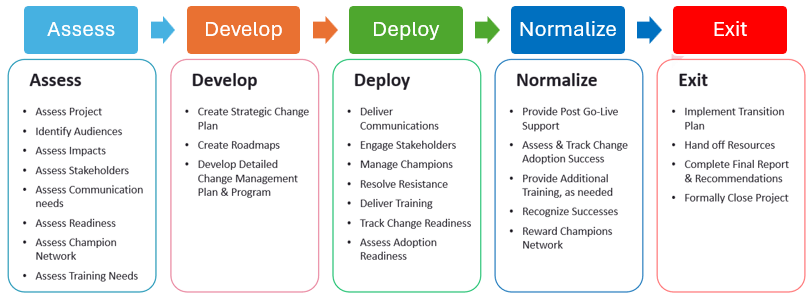
What makes an effective change management model? It’s all about simplicity and effectiveness. Change doesn’t have to be complicated if you break down the process into bite-sized pieces. The below is a good example of this.
Five Phases of the OCMS Change Management Framework:
- Assess: Evaluate the current state and identify the areas that require change. This phase involves understanding the scope, impact, and readiness for change within the organization.
- Develop: Create a detailed change management plan. This includes defining objectives, strategies, and actions required to implement the change successfully.
- Deploy: Execute the change management plan. This GO-LIVE phase focuses on communication, training, and support to ensure employees are prepared and engaged with the change.
- Normalize: Integrate the change into daily operations. Monitor progress and address any issues to ensure the change is fully adopted and becomes an integral part of the organizational culture.
- Exit: Conclude the change management process. Evaluate the outcomes, document lessons learned, and ensure the change is sustainable in the long term.
Benefits of the OCMS Framework:
Increases User Adoption: Encourages employees to embrace change, leading to higher adoption rates for new technologies or processes.
Reduces Resistance: Addresses concerns and provides support, minimizing resistance and creating a smoother transition.
Improves Communication: Emphasizes clear and consistent communication, ensuring everyone is informed and involved
This structured approach enables organizations to manage the human side of change, ensuring that transitions are less disruptive and more successful.
Learn more about Organizational Change Management (OCM) Framework >


 Dallas Dutch Girl
Leave a comment